Where does the hydrogen come from?
Advisory Board meeting of h2-netzwerk-ruhr
The Advisory Board of h2-netzwerk-ruhr addressed the question of where the enormous quantities of climate-neutral hydrogen can come from in the future at its current meeting on May 2, 2023 at the Gas and Heat Institute (GWI) in Essen.
For the host, GWI, Dr Rolf Albus and Prof Klaus Görner welcomed the group. For Prof Görner, one thing was clear: “Where it still says natural gas today, more and more hydrogen will be going in in the future.” He assumes that substituting 1,000 TWh of natural gas by 2030 will be achieved 50% by hydrogen, 25% by biogas and the remaining 25% by LNG. The first presentation by management consultant Brian Mohr LL.M looked at future H2 supply chains from Angola, Namibia and Saudi Arabia. Namibia is one of Africa’s most democratic countries, with enormous potential for wind and solar energy, and can therefore drive economic development around green hydrogen. However, Namibia will ensure that a large part of the hydrogen value chain is built up within the country.
In Angola, the insider tip for a hydrogen partnership, there is great potential for hydropower and infrastructure for exporting hydrogen.
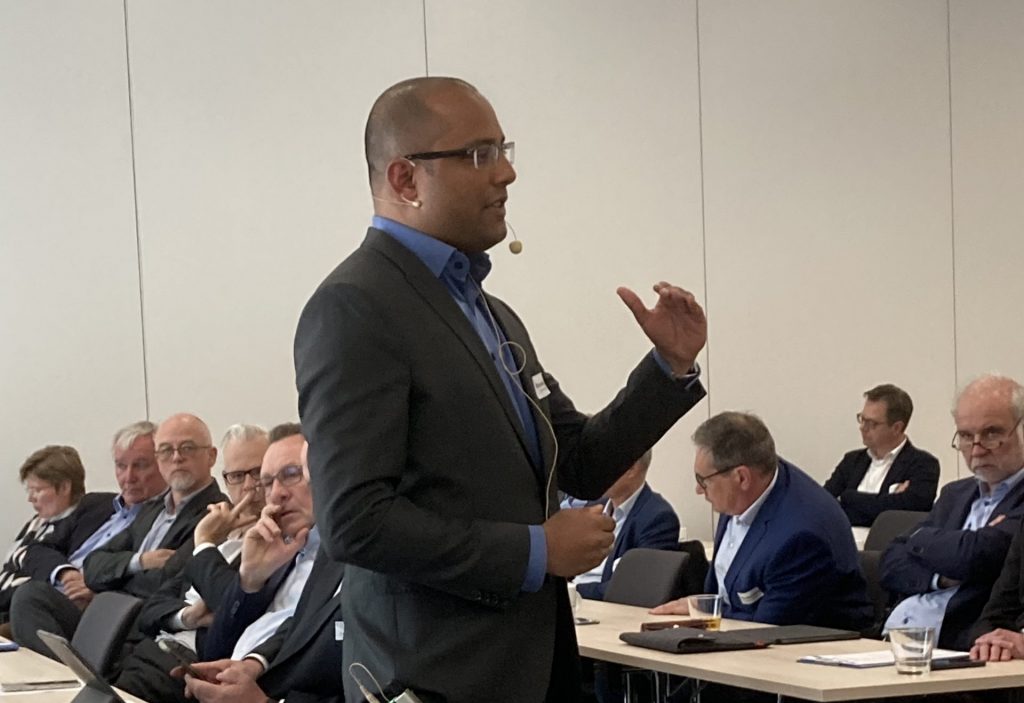
Timo Haasch from engineering company Fichtner GmbH & Co KG highlighted the questions of how hydrogen can be transported to Europe, stored and made available. One option is conversion into ammonia at the place of production; ships, infrastructure facilities and many years of experience already exist for transporting it. There is still a problem due to the lack of ammonia crackers for reconversion, but there is strong confidence that plant engineering will be able to develop the relevant technologies in time. However, a market shift to LH2 is also not ruled out; the technology for this will not be available until 2030 at the earliest.
The presentation segment concluded with a very spirited talk by Jorgo Chatzimarkakis, CEO of Hydrogen Europe. Chatzimarkakis reported that the Renewable Energy Directive sets targets for the mandatory quantities of hydrogen that must be achieved by 2030: the steel industry needs 1.5 million tonnes, and all other sectors a further 3.5 million tonnes by 2030. At the moment, we need signatures on concrete contracts to order hydrogen so that the corresponding investments in industry are triggered. In the mobility sector, Member States must build 665 hydrogen refuelling stations by 2030.
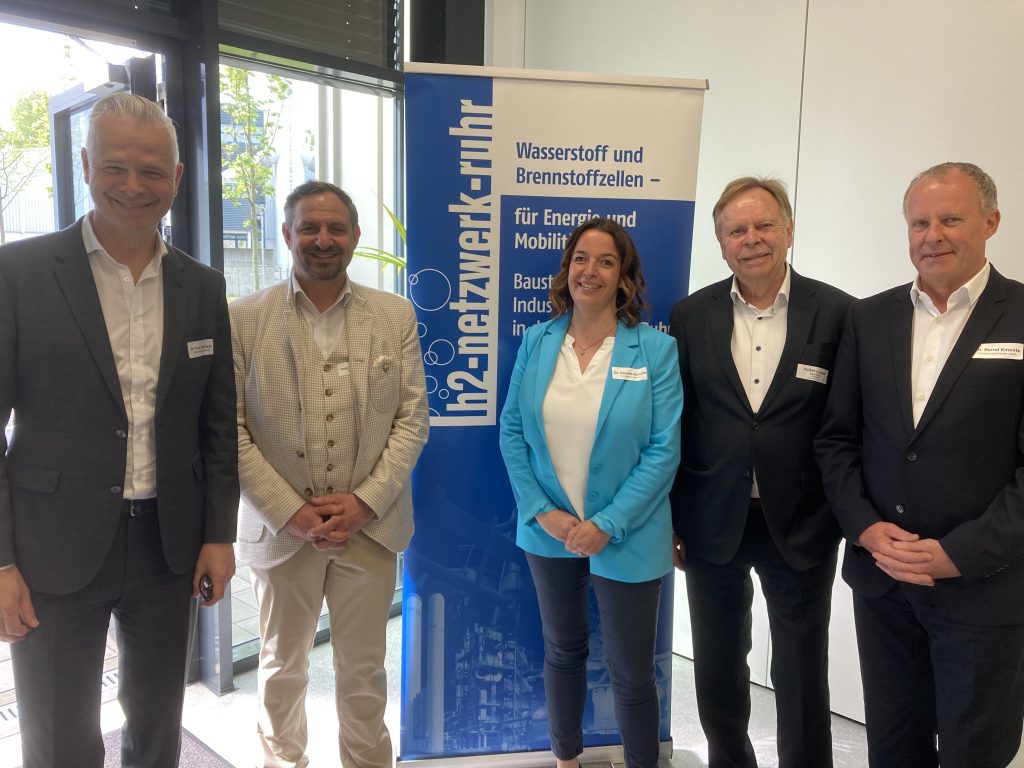
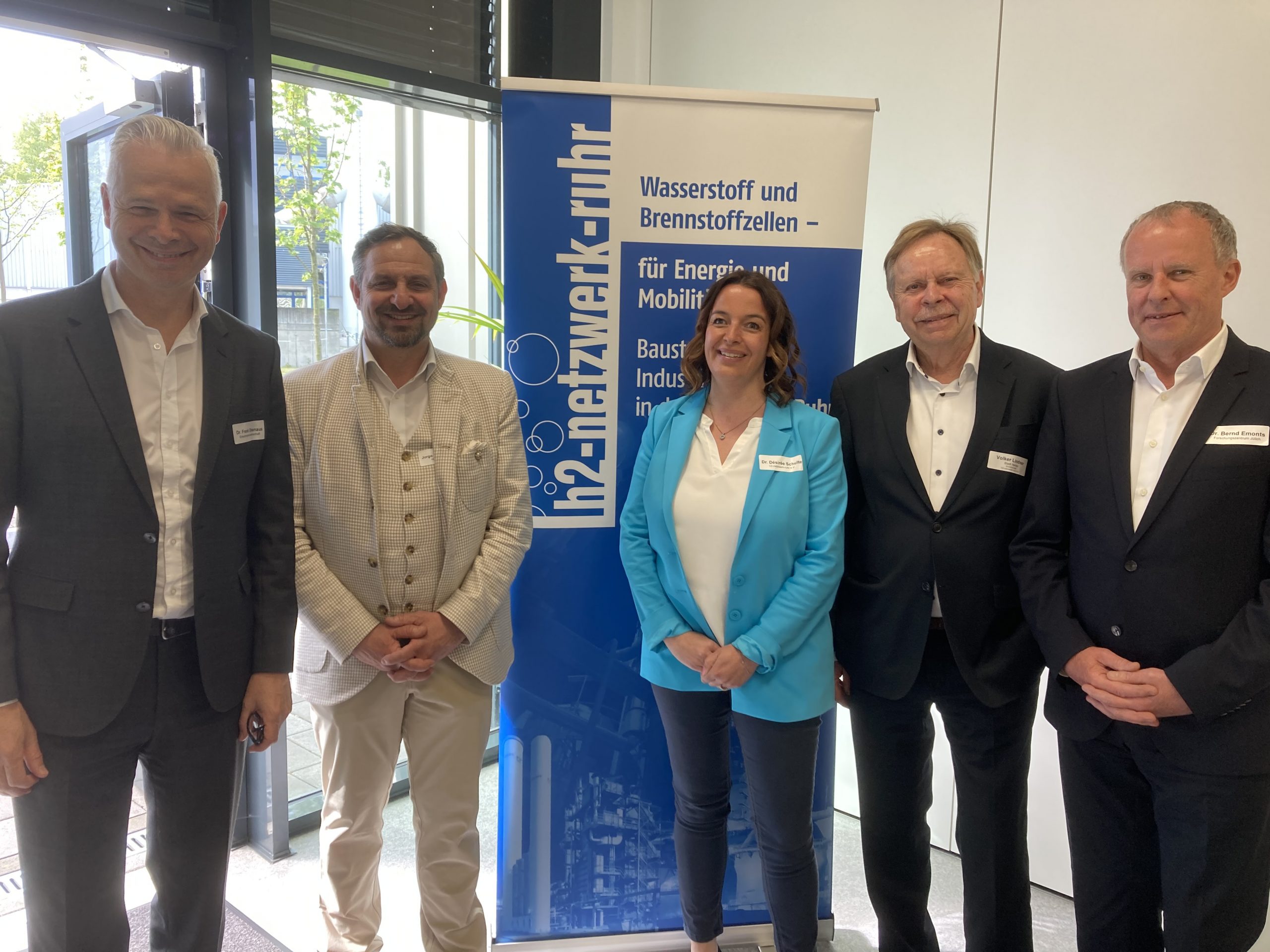
Finally, Volker Lindner bid farewell to the Chair of the Advisory Board, Dr Bernd Emonts from Forschungszentrum Jülich, from his role as Chair and thanked him for his many years of commitment. Lindner pointed out that the first presentation at the first Advisory Board meeting on 29/09/2009 was given by Dr Emonts. He has chaired the Advisory Board since November 2015 and has since prepared numerous Advisory Board meetings and chaired them with confidence.
At the in-person events of h2-netzwerk-ruhr, personal exchange always plays a major role, for which GWI provided an excellent setting with its new premises.