Recklinghausen University Talks Address Hydrogen
First Meeting After Corona Is a Great Success
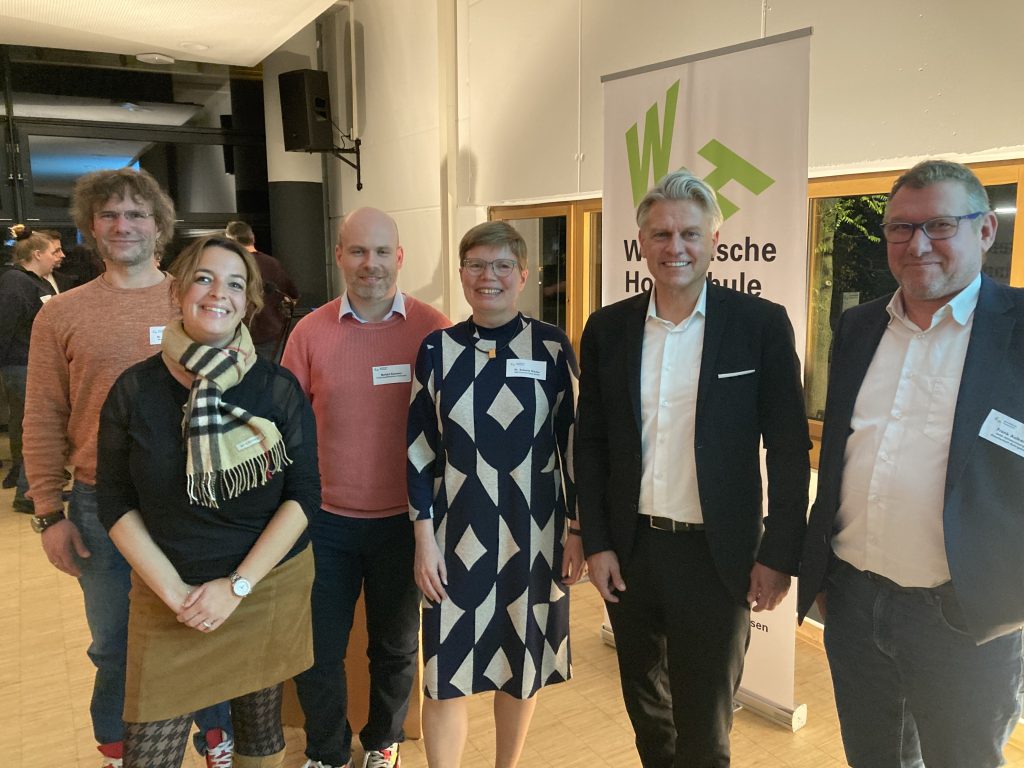
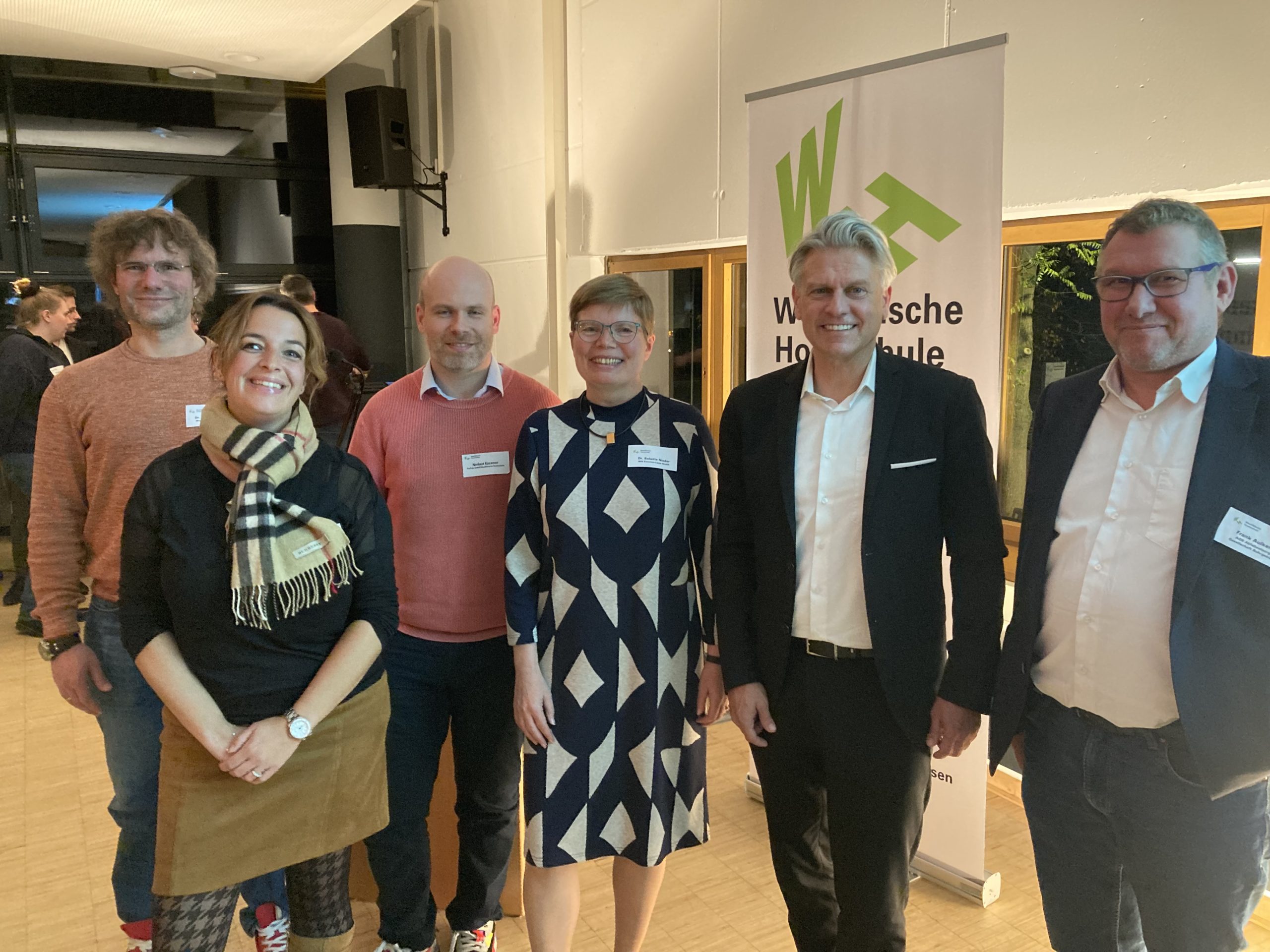
Over 80 participants were welcomed by Dr. Babette Nieder, the evening’s moderator, to the Recklinghausen University Talks on November 12 in the cafeteria of Westfälische Hochschule. The interest in learning about applications of hydrogen in small and medium-sized enterprises was clearly significant.
Recklinghausen’s Mayor Christoph Tesche, Peter Brautmeier as deputy chairman of the Vestische Freundegesellschaft of the university, and Dr. Florian Wirkert as head of the H2 Solution Lab at Westfälische Hochschule welcomed the participants.
Engaging Technical Presentations and Discussions
The technical presentations were delivered by Dr. Norbert Kazamer (Pro Puls GmbH), Dr. Christian Preetz (WILO SE), and Frank Aulkemeyer (Abfallentsorgungsgesellschaft Ruhr/AGR): Dr. Kazamer presented work on a high-pressure electrolyzer that helps avoid the energy-intensive—and therefore expensive—intermediate step of hydrogen compression.
Dr. Christian Preetz demonstrated that WILO SE has implemented a power plant at its own production facility that represents the complete cycle: electricity through photovoltaics—hydrogen generation in the electrolyzer—storage in the H2 tank—reconversion to electricity in the fuel cell. To increase efficiency, the resulting heat is utilized in operations.
Frank Aulkemeyer explained the importance of emission-free waste collection vehicles and the solution found by AGR: With two electrolyzers, the green electricity from waste incineration is used for H2 generation and then dispensed at four dispensers (fuel pumps) with either 350 or 700 bar for refueling waste collection vehicles. Aulkemeyer highlighted the numerous regulatory challenges: For instance, the electricity is exempt from levies—but no one knows which levies are meant and how this is to be implemented. Therefore, the levies are initially collected by the grid operator.
For h2-netzwerk-ruhr e.V., which was founded 16 years ago in the Emscher-Lippe region, Dr. Désirée Schulte took the opportunity to introduce the network with its now 92 members (the majority of which are companies from throughout the Ruhr area) to those present and to encourage them to utilize the excellent professional exchange opportunities of network collaboration through membership. Subsequently, there was an opportunity for questions to the speakers and for discussion.
Energy Transition Requires Hydrogen
As a conclusion from the evening, one can state: The energy transition will necessarily require hydrogen. However, market ramp-up is just beginning. For individual operations, one must carefully examine which applications are sensible and economical and where economic viability could be achieved through the use of funding.
The great success of resuming the university talks after the corona break has convinced the organizers to continue with this format next year. The university talks are organized by the economic development agencies of the cities of Recklinghausen and Herten, Westfälische Hochschule, and the Vestische Freundegesellschaft.