Evonik aims to make green hydrogen more affordable
Innovative membranes developed for water electrolysis
Green hydrogen is considered a beacon of hope for the energy transition. On the one hand, it serves as a CO2-free energy carrier for industry and mobility; on the other, hydrogen is an important feedstock for the chemical industry. Green hydrogen is produced from water by electrolysis using electricity from renewable sources. At present, it is still significantly more expensive than conventional hydrogen, which is generally produced from methane gas with the formation of carbon dioxide. In addition to low-cost green electricity, the capital costs of the electrolyser are crucial to the economic viability of green hydrogen.
Particularly efficient and cost-effective electrolysis technology
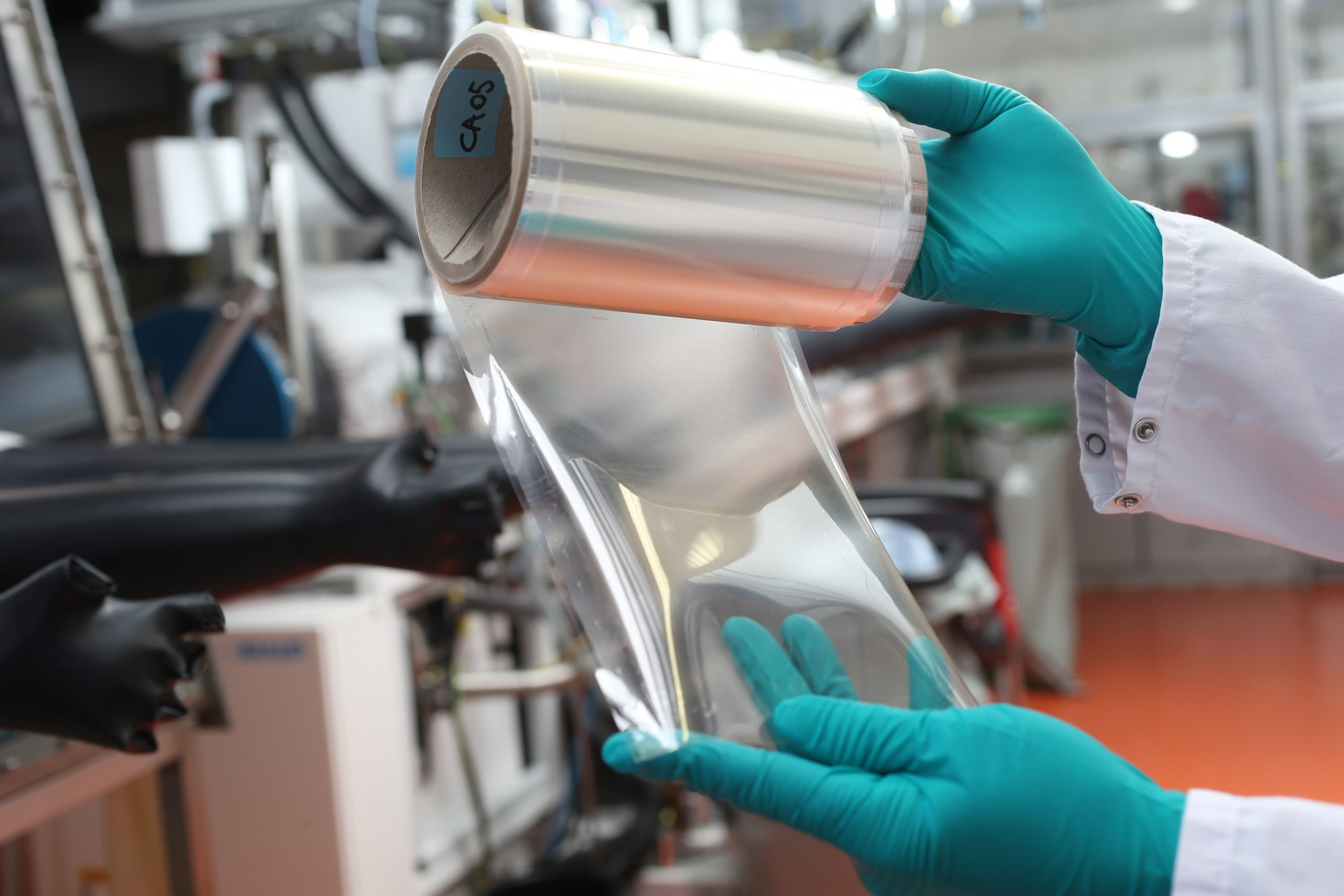
A central component of the electrolyser, which has a major influence on efficiency and reliability, is an ion-conducting membrane. Evonik has now developed a novel anion exchange membrane (AEM) that is intended to help hydrogen production via electrolysis achieve a breakthrough. “With our membrane, a particularly efficient and cost-effective electrolysis technology could be commercially realised,” says Oliver Conradi, who is responsible for membrane research at Evonik’s strategic innovation unit Creavis.
The development by the Creavis researchers and the experts from the High Performance Polymers business line in the innovation growth field of membranes consists of a robust polymer with excellent performance metrics. Conradi adds: “The polymer chemistry of the membrane is the key to the performance and efficiency of electrolysis. And we now hold that key in our hands.”
€2 million in EU funding
Compared with other electrolytic processes such as classic liquid electrolysis with a diaphragm (AEL) or the newer PEM electrolysis (short for Proton Exchange Membrane) under acidic conditions, electrolysis with anion exchange membranes offers clear advantages. AEM electrolysis promises lower investment costs, because operation under alkaline conditions enables the use of non-precious-metal materials for the cells, which are therefore significantly less expensive. In addition, it is characterised by high current density, very good efficiency and high flexibility in power input. A consortium with partners from industry and research now intends to plan, build and test an AEM electrolysis system with the new Evonik membranes in the research project “CHANNEL”. The name “CHANNEL” stands for “Cost-efficient Hydrogen production unit based on ANionN exchange membrane Electrolysis”. The project has a duration of three years. The European Union is funding “CHANNEL” through the “Horizon 2020” research programme with around two million euros. Project partners are, in addition to Evonik for the AEM membrane, the Dutch company Shell as a hydrogen user, Enapter (Italy) as the plant manufacturer for the electrolyser, Forschungszentrum Jülich for the membrane electrode assembly, the Norwegian University of Science and Technology (NTNU) for the catalysts, and SINTEF as an independent research organisation in Norway for project coordination. This means the project consortium covers the entire value chain for the production of green hydrogen.
Title photo: Evonik / debo