Public Transport Becomes Lower in Emissions
30 Fuel Cell Hybrid Buses for Regionalverkehr Köln
Regionalverkehr Köln GmbH (RVK) is receiving a total of 13 million euros in funding for the procurement of 30 fuel cell hybrid buses and two hydrogen refueling stations – this means that RVK will likely operate Germany’s largest fuel cell hybrid bus fleet by 2019. 7.4 million euros of the funding comes from the National Innovation Programme for Hydrogen and Fuel Cell Technology of the Federal Ministry of Transport and Digital Infrastructure. The commitment for the remaining 5.6 million euros comes from the EU project “Joint Initiative for Hydrogen Vehicles across Europe”, or JIVE for short.
“With these funding commitments, we have come a very significant step closer to the goal of our ‘Zero Emission’ project, in the course of which we are striving for completely emission-free local transport in our service area,” said RVK Managing Director Eugen Puderbach.
The vehicles are scheduled to reinforce RVK operations at the Hürth, Meckenheim, and Wermelskirchen locations at the end of 2018 / beginning of 2019. There is a funding option for an additional ten vehicles; these additional fuel cell hybrid buses are expected to enter service by 2020 at the latest.
In 2015, RVK, together with the energy cluster “HyCologne”, received recognition as a pioneer in climate protection from the NRW state initiative “KlimaExpo.NRW” for the project “Sustainable Public Transport through Hydrogen Buses in the Cologne Region”.
Wuppertal is also increasingly turning to low-emission and emission-free public transport: Wuppertaler Stadtwerke (WSW) is planning to deploy ten fuel cell buses in its own network. Wuppertal is thus also participating in JIVE, the EU’s Europe-wide funding program for fuel cell vehicles.
Further information on the RVK project here, on the WSW fuel cell buses here.
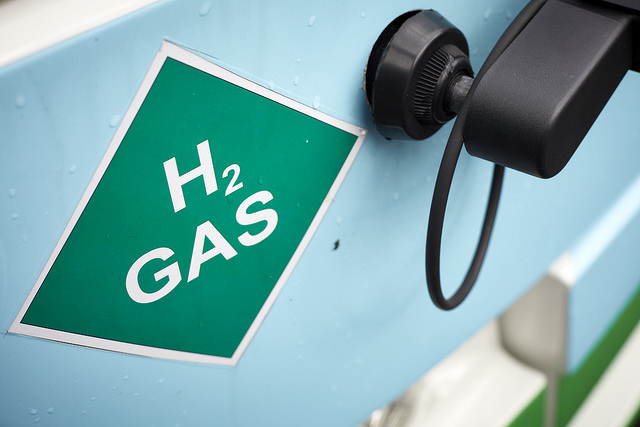
Photo: flickr / EnergieAgentur.NRW