h2-network member AGR opens high-capacity hydrogen refueling station
Contribution to the decarbonization of waste management logistics in the region
AGR Abfallentsorgungs-Gesellschaft Ruhrgebiet mbH (AGR) has opened a high-capacity hydrogen refueling station with a production capacity of 1,600 kg per day. This plant complex marks a significant step towards a sustainable and emission-free future for waste management logistics. From waste, AGR now produces hydrogen in addition to electricity and district heating. Furthermore, through its own production of green hydrogen and with a trailer station, AGR will also be able to supply green hydrogen to other customers.
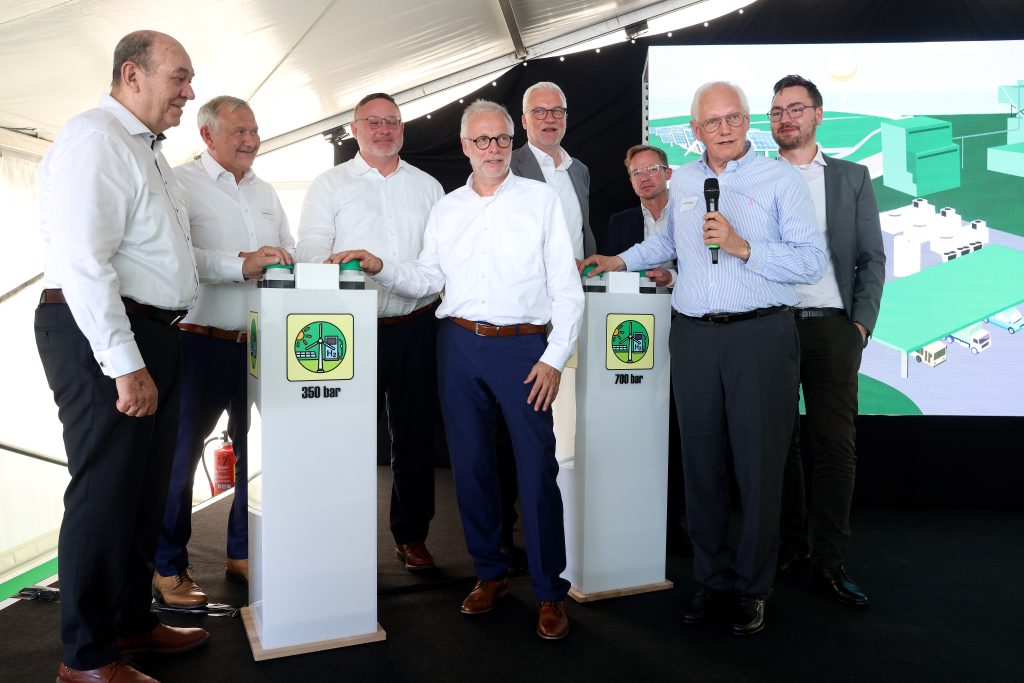
The inauguration on June 25, 2024, celebrated this significant milestone together with representatives from state and local politics and the regional economy.
For many years, AGR has been producing electricity and district heating from delivered waste at the RZR Herten. Now, hydrogen is also being added. AGR obtains the energy required for hydrogen production by increasing energy efficiency in its own waste incineration plant. The H2 production is also designed so that, in addition to electricity from waste incineration, electricity from AGR’s own renewable energy sources, such as wind or photovoltaics, can be used for production.
Ina Scharrenbach, Minister for Home Affairs, Municipal Affairs, Building and Digitalization of the State of North Rhine-Westphalia: “In times when efficiency and circular economy are becoming increasingly important, this project – with its associated in-house production of hydrogen – sets standards for the municipal economy. It shows: ideas trump ideology. Technology-open innovation and sustainability go hand in hand to make waste management more resource-efficient and reduce CO2 emissions. The Ruhr Metropolis is hydrogen-ready.”
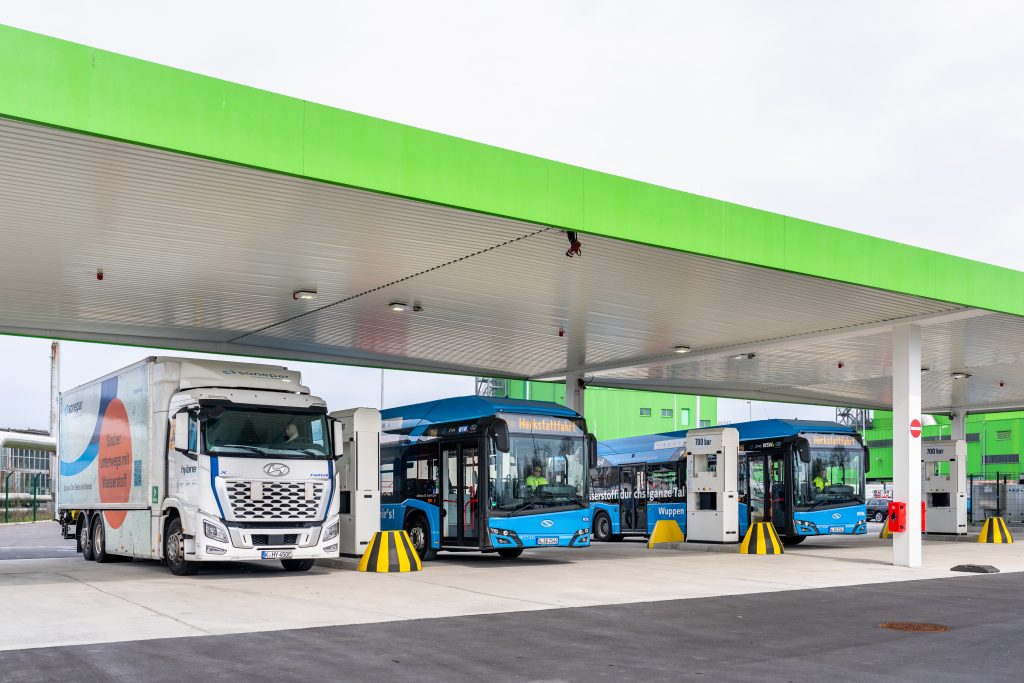
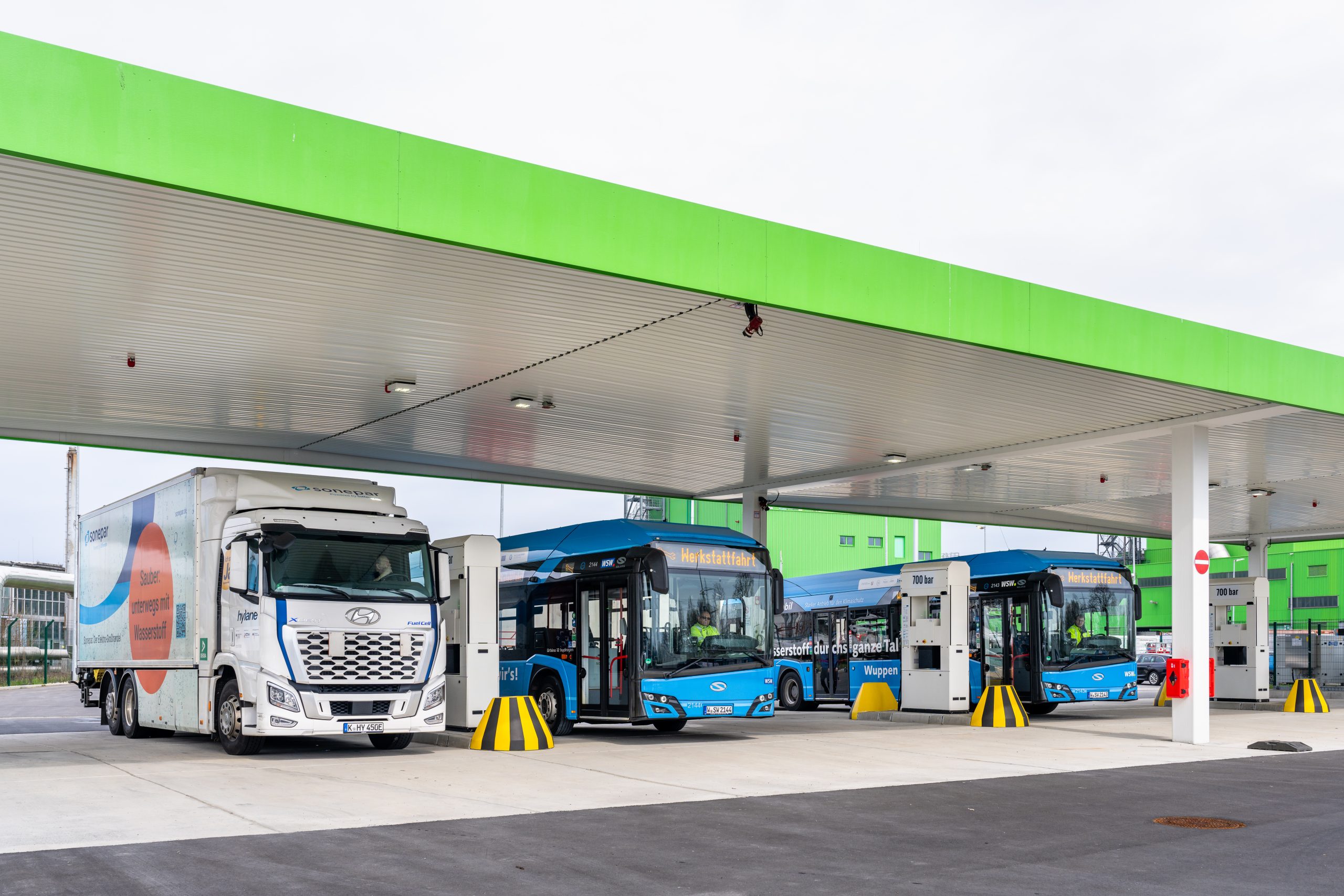
The production plant with electrolyzers, compressors, and storage tanks will produce approximately 440,000 kg of hydrogen annually for the hydrogen refueling station. The connected high-capacity hydrogen refueling station can fill vehicles with 350 bar and 700 bar at four dispensers, making it suitable for refueling trucks, buses, and passenger cars. The estimated annual production enables more than 40 million emission-free passenger car kilometers or more than 4 million truck kilometers. Waste collection vehicles from AGR’s own fleet and from surrounding municipalities can be refueled in this way in the future. An additional 100,000 kg of hydrogen can be offered to other customers.
“Waste to be disposed of is thermally processed in the waste incineration plant and then converted into electricity. The residual waste bin thus becomes an energy bin in the best sense. The operation of the hydrogen refueling station with hydrogen produced at the RZR is also an important component on the path to decarbonizing our logistics, as well as logistics in the region, thus contributing to the energy transition and climate protection. At the same time, today marks another important component in our overall strategy to achieve CO2 neutrality for our company in the medium term,” said Joachim Ronge, Chairman of the AGR Management Board, also thanking all project partners and AGR’s own project team for their successful collaboration. Following a Europe-wide tender, Linde AG was awarded the contract in 2019 for the construction of both the production plant and the hydrogen refueling station on AGR’s premises.
The new hydrogen refueling station is publicly accessible. In addition to the H2 waste collection vehicles from surrounding municipalities, the approximately 30 passenger cars in AGR’s vehicle fleet, as well as all other private passenger cars of hydrogen vehicle owners from the area, can be refueled safely and environmentally friendly.
The Hydrogen Production with High-Capacity Refueling Station project was funded within the framework of the National Innovation Program for Hydrogen and Fuel Cell Technology by the Federal Ministry for Digital and Transport. The funding guideline is coordinated by NOW GmbH and implemented by Project Management Jülich (PtJ).